

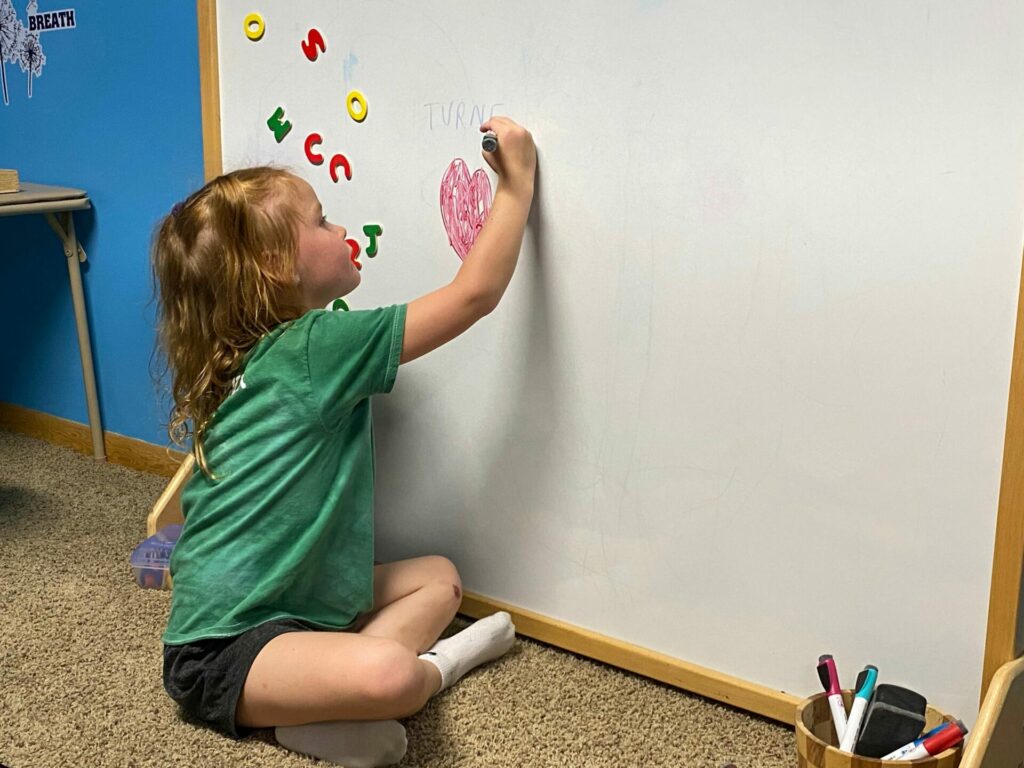
Kids like 4-year-old Baelyn Schwab and 5-year-old Turner Gatzemeyer see the sensory room at Lighthouse Preschool as the “playroom,” but it helps them more than they realize.
Jenelle Siebert is the director at Lighthouse Preschool, which is just south of Saint Paul Lutheran Church. As students were going back to school after the COVID-19 lockdown in 2021, she noticed many of her preschool students were struggling with their emotions and motor skills like walking, sitting up, grabbing toys, etc. Siebert decided she needed to act.
MORE: Family working to raise funds for headstone after infant’s death
“We were trying to find a way for those kids to be able to participate and learn and be able to help their growth,” she said.
Lighthouse Preschool became one of the first preschools in Aberdeen to create a sensory room for students. It was designed by an occupational therapist to help preschoolers with their sensory needs.
“For the kids who are active and have a little more energy, we have a mini-trampoline and a climbing bar for them to swing on,” Siebert said. “For kids who want to get away from the noise, we have fidget toys, books, a magnet and marker board where they can draw. We also have chairs and a balance beam for those who need help with their balance.”
Younger kids can struggle to express themselves
Siebert said many kids at 5 and younger have a tough time expressing themselves and need a way to communicate those feelings.
“Being able to step away from the classroom for a few minutes to get out some extra energy or get away from the noise and have their bodies and brains reset helps a lot,” she said. “Then they’re able to come back to the classroom and be able to sit down and participate and do the things everybody else is doing by just having that little bit of a break.”
MORE: Aberdeen girl’s camper wish granted after liver transplant
Kelsea Schwab is the mother of Baelyn, who has attended Lighthouse for two years. She said Baelyn is one of the more medically complex students Siebert looks after. Baelyn has had a liver transplant and suffers from attention-deficit/hyperactivity disorder and sensory processing disorder.
“When you add everything up, it is very difficult for her to transition between things and stay on task,” Kelsea Schwab said. “The sensory room has been great with it allowing her freedom and fulfilling her bucket the way it needs to be fulfilled.”
Tasha Gatzemeyer’s daughter, Turner, loves the sensory room for drawing and being able to show her artistic side. Along with drawing, the board also helps Turner hold a pencil and marker correctly.
“It’s great for her to have an outlet to get out and meet her fine and gross motor needs, and it’s been a huge asset to the preschool,” Tasha Gatzemeyer said.
“They don’t actually realize they’re working on important skills,” Siebert said. “To them, they’re just playing.”
She said the community is becoming more aware of sensory issues with children and is starting to view sensory rooms as a better outlet for children than medications.
Sensory rooms can help students during academic careers
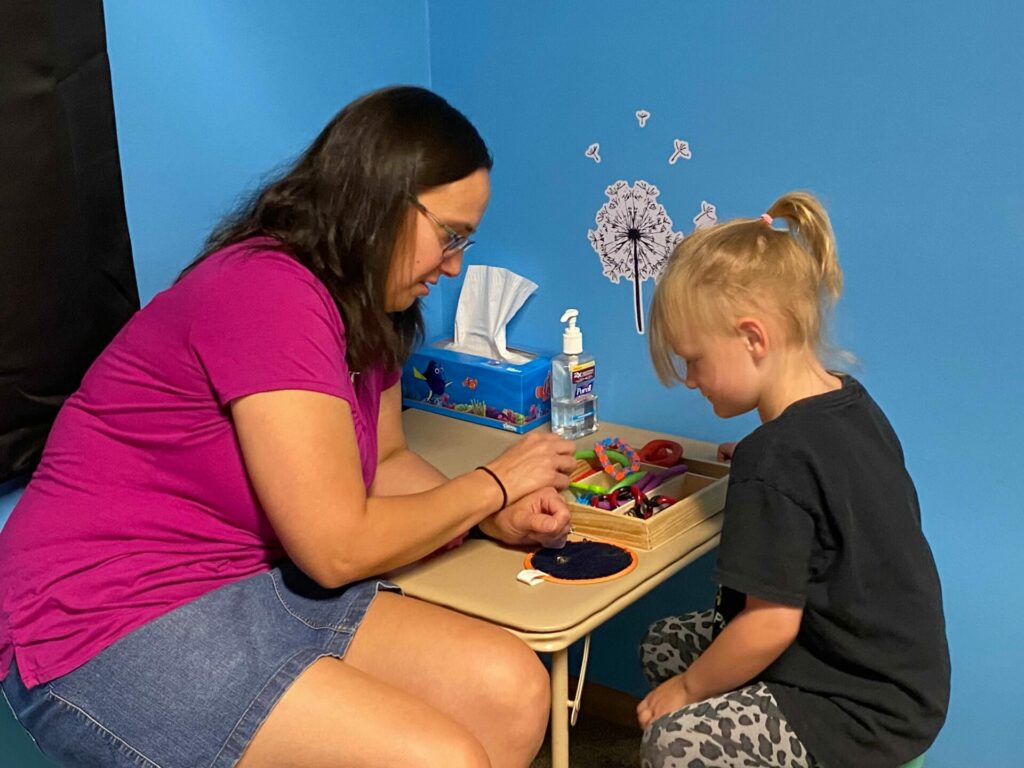
Siebert said sensory rooms can have a huge effect on children later in their lives.
“If kids can’t process the information they’re getting in a classroom, they’re going to struggle throughout their academic life,” she said. “To be able to provide them with that outlet and those safe ways of learning emotional regulation and working on those motor skills will help their brain development throughout school.”
For now, Lighthouse Preschool is content with the room and what it offers children, but Siebert would love to someday expand.
“In the future, I would love to be able to expand it into the general classroom,” she said. “Put things up on the wall and things kids can play with anytime of the day.”
link