
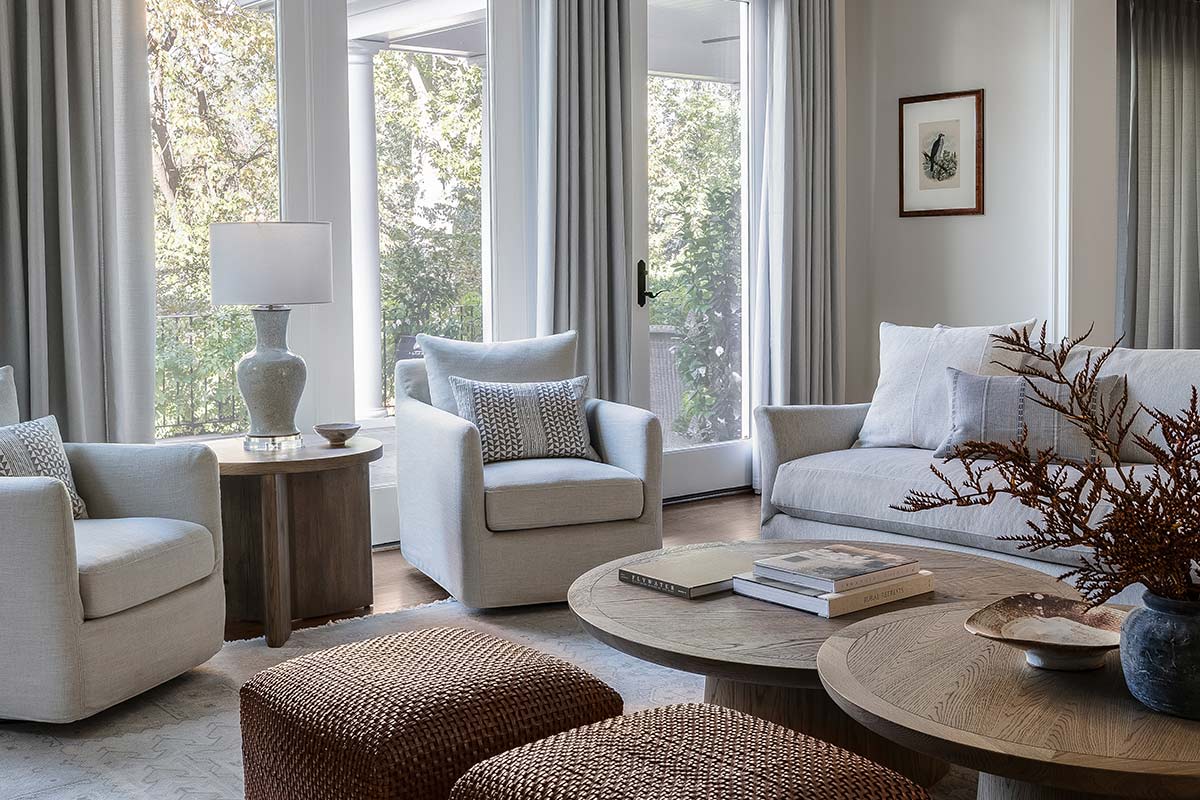
Three NoVA designers share their tips for setting up your living room, dining room, and bedroom.
Arranging furniture in any room of your home is an art that boils down to flow, functionality, and proportion, design experts say.
“I think the biggest mistake that people make is they buy furniture that’s too small or too big,” says Kristin Harrison, owner and principal designer at Bungalow 10 Interiors. “It’s nice to make sure that you’re not … overcrowding the space with too much furniture, or too large of furniture.”
The golden ratio to keep in mind is a 60-40 rule. “Forty percent of your room should be empty, and 60 percent should have something in it,” says Kelsey Wing, director of marketing and creative at furniture company Thos. Moser.
The size and shape of the room will help determine the furniture. “Is it a square room? Is it long and horizontal? Because that can help guide what shapes you’re looking for in the furniture … that’s really true for dining and lounge pieces,” says Wing. “Consider the orientation of the room and align the furniture that way as well.”
When adding furniture, designers recommend using painter’s tape to map out where each piece will go so you can see the room’s flow.
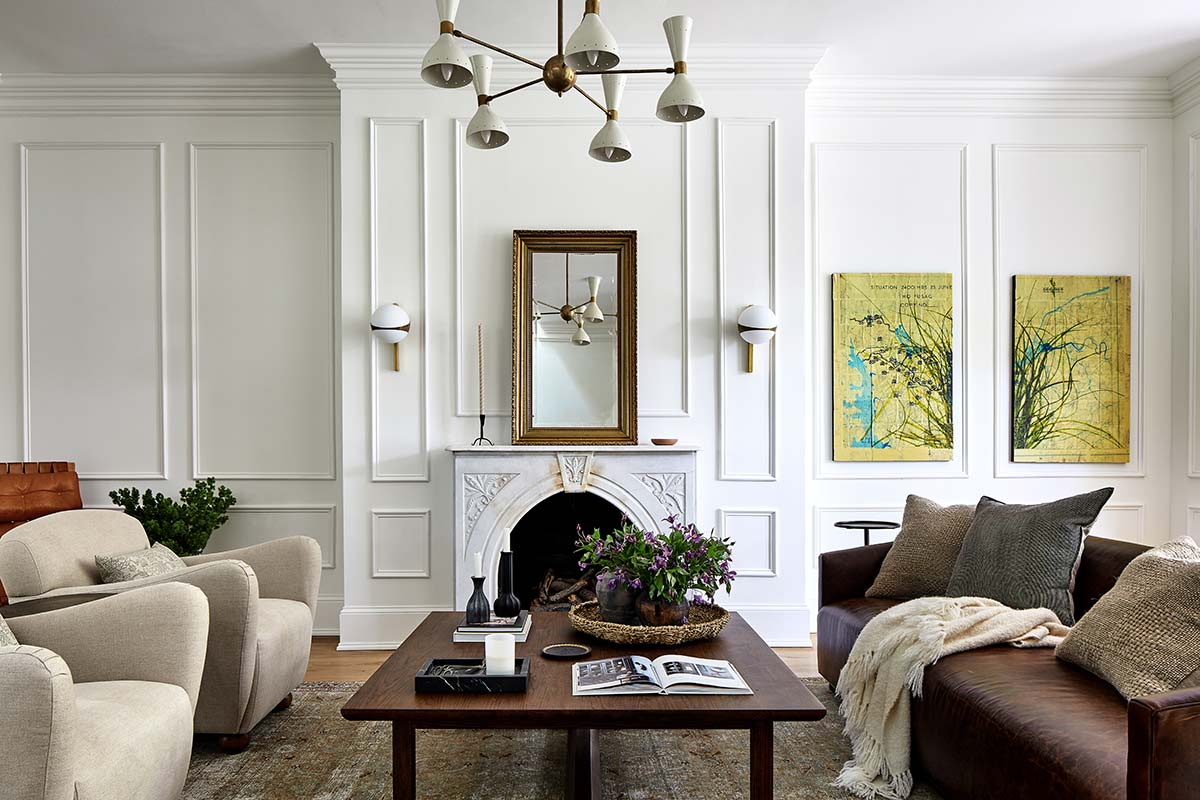
Living Rooms with Breathing Room
- “We first establish the function, and then from there, we can turn to focal points. We want to figure out what the focal point in the room is going to be,” says Sara Swabb, founder and creative director of interior design firm Storie Collective. In a living room, those focal points may be the fireplace, artwork, TV, or overhead lighting.
- The center point of artwork should be 57 inches from the ground and not take up more than two-thirds of the wall space.
- Put 2 feet of separation between a sofa and two chairs. “If you’re putting a coffee table in the center as well, you should have at least 2 feet of separation from all furniture and the table,” says Wing.
- Coffee tables should be half to three-quarters the length of the sofa and should be close enough for people to use, says Harrison.
- When you place furniture in a living room, the general rule is that furniture pieces should be 18 to 24 inches apart, and walkways should be 36 inches wide. “If it’s not a major traffic area, that’s when you can break the rule,” Swabb says.
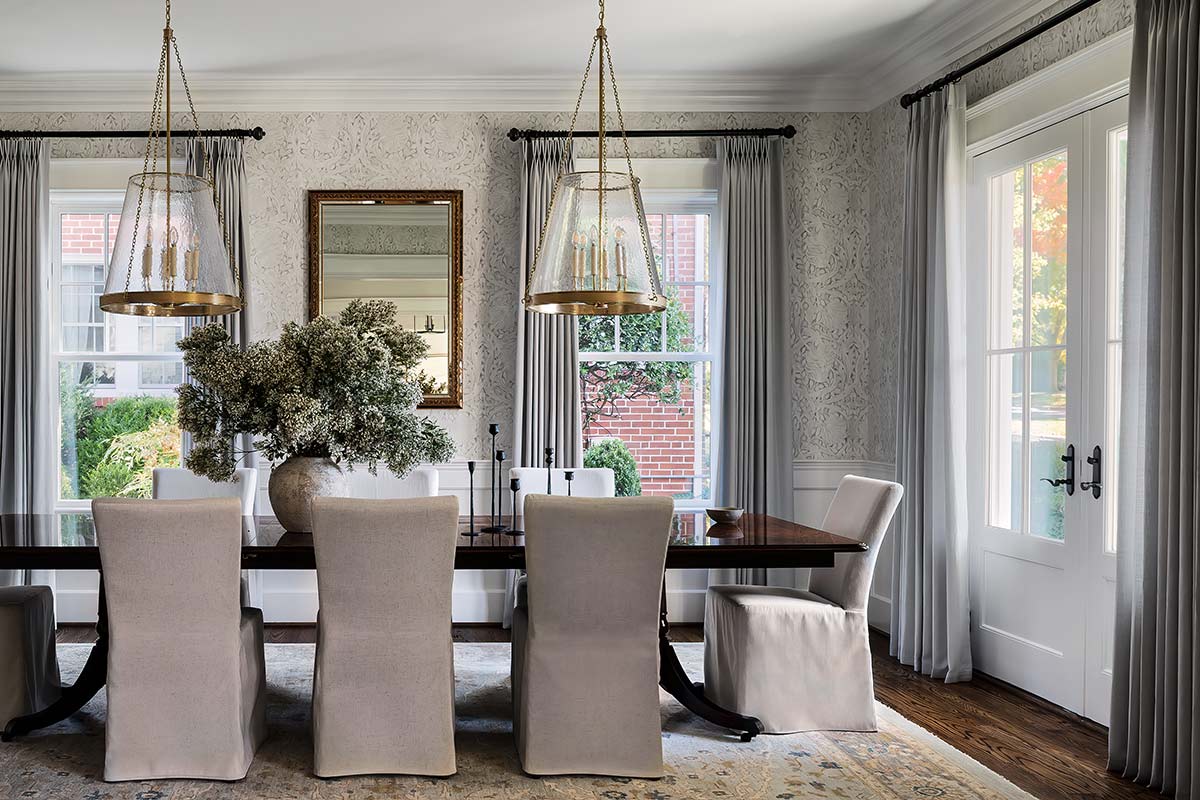
Comfortable Dining
- The dining room’s size will determine whether a rectangular, square, or circular table fits best. Rectangular or oblong tables work best in rectangular rooms, while square or round tables are suitable for square rooms. The key to dining tables is to make sure everyone has enough space.
- If your chairs are 18 inches wide, make sure you have at least 24 inches between people seated at the table. “I think a lot of people try and jam too many seats at their dining room table,” Harrison says.
- A walkway around a table should be 3 to 4 feet wide so that people can pull out their chairs comfortably and not feel they are on top of one another, Harrison says.
- A rug under a dining room table should extend at least 2 feet beyond the table. Swabb says the ideal is 3 feet. Harrison recommends a flat-weave rug so there’s a smooth surface as chairs are pulled out.
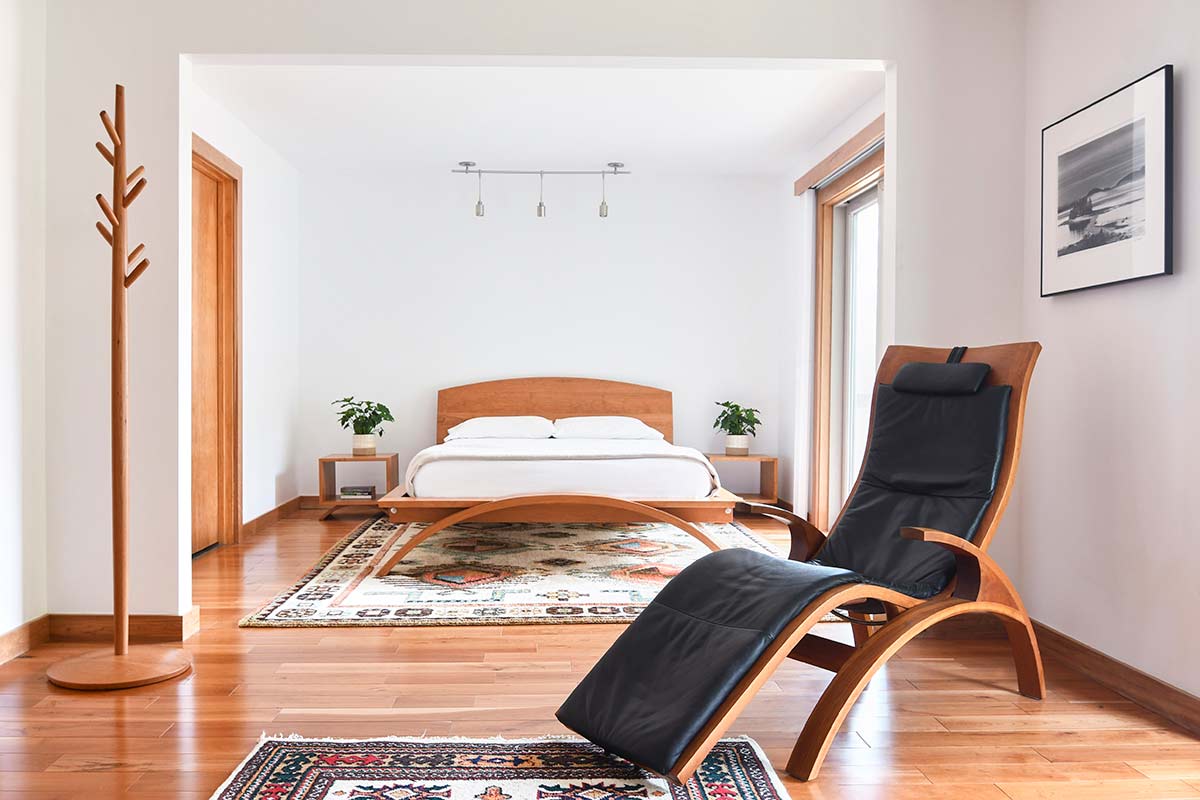
Sleeping in Style
- Proportion matters. “The biggest mistake that people make is that they want a really big bed, but then the things surrounding the beds are way too small, so the scale always looks off,” Harrison says. To create a good flow in the room, the door should be to the right or left of the bed. “I never like the door to open into a bed,” Swabb says.
- The height of a nightstand should sit 2 inches below the top of a mattress so you don’t have to lean down or reach up too high to get bedside items, Wing says. For the proper height, measure from the floor to the top of the mattress.
- Ideally, you should allow 3 feet of space on each side of the bed and at the end of it, Wing says.
- Use rugs to ground and define areas in larger rooms.
- When it comes to furniture arrangement, Harrison says, “there’s a lot of math involved.” Her advice if you’re doing it yourself? Measure 10 times and buy once.
Feature image by Angela Newton Roy Photography
This story originally ran in our January Issue. For more stories like this, subscribe to Northern Virginia Magazine.
link