


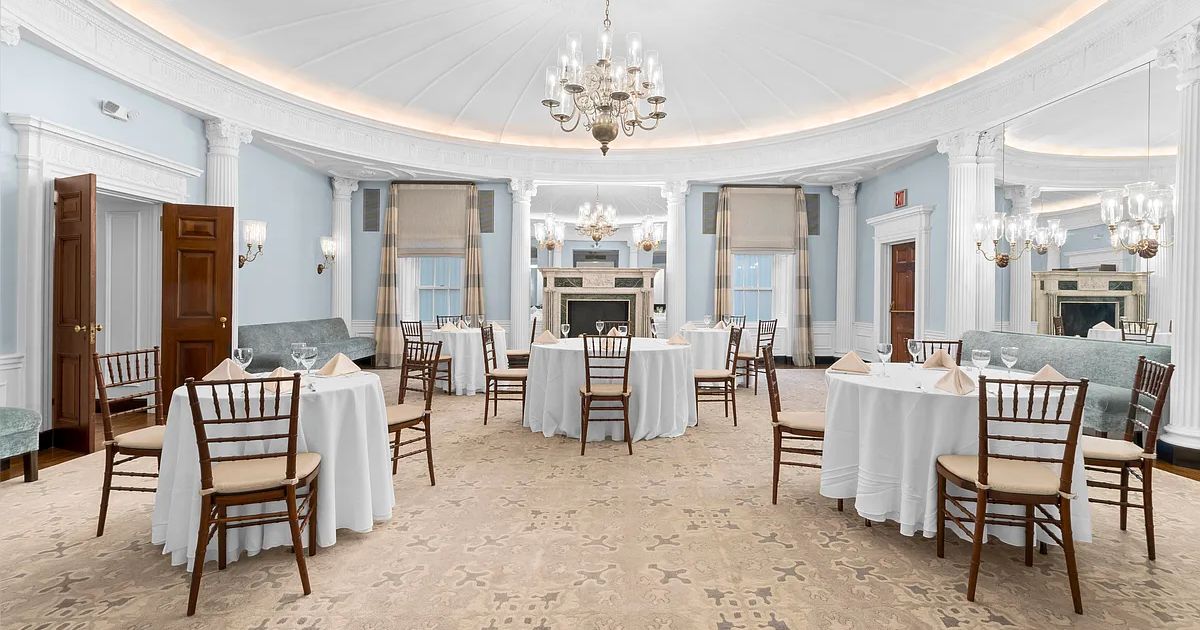

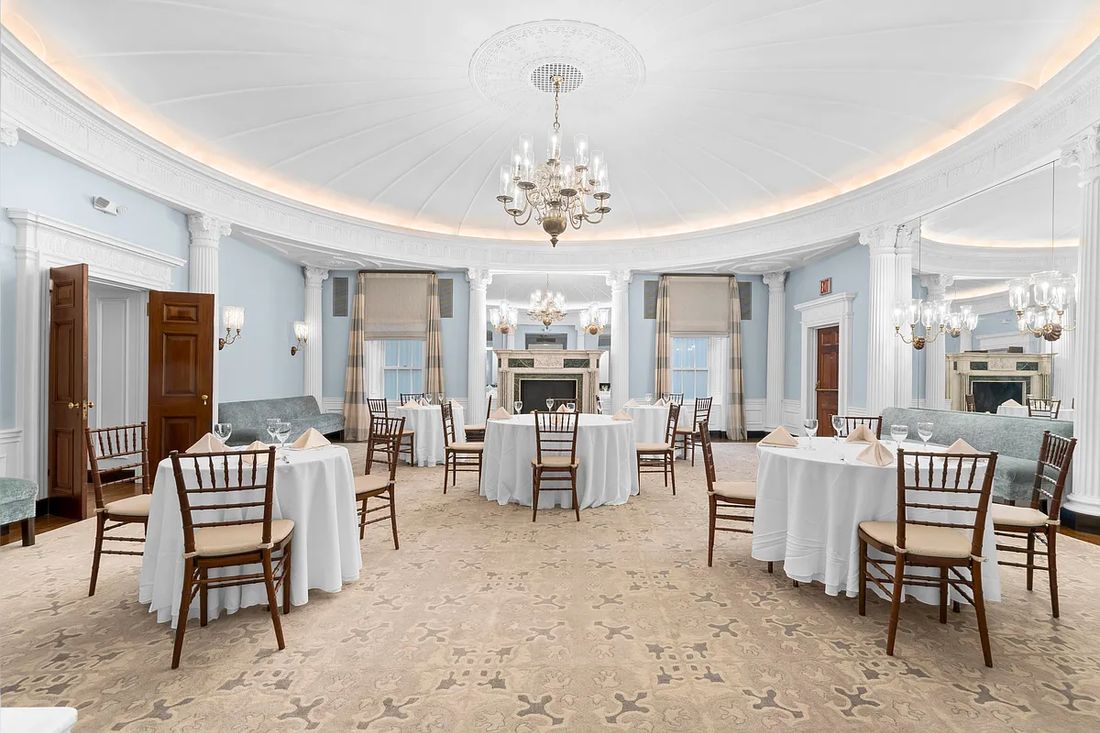
A listing photo shows a rare view into the Georgian Suite at 1A East 77th Street. It has been rented out for parties but started life as a private restaurant — a precursor to the age of private restaurants in luxury condos.
Photo: Sotheby’s International Realty
In late July, in the middle of a heat wave that made turning on the stove feel impossible, Kathryn Steinberg was hosting eight friends for dinner. So to plan the menu, she called down to the kitchen on the ground floor, which has been serving residents of 1 East 66th Street for the better part of a century. She’s on a first-name basis with the chef, a Frenchman who knows her likes (complex stews) and her dislikes (cilantro). He suggested broiled swordfish and warm pasta with summer tomatoes. Perfect. Would she like to take the meal in the private dining room off the lobby or at home? Bring it up, please. The night of the party, dinner was rolled into her penthouse on hotel carts. Steinberg only had to show up. After 25 years in the building, she says, “Any skill I had cooking is totally gone.”

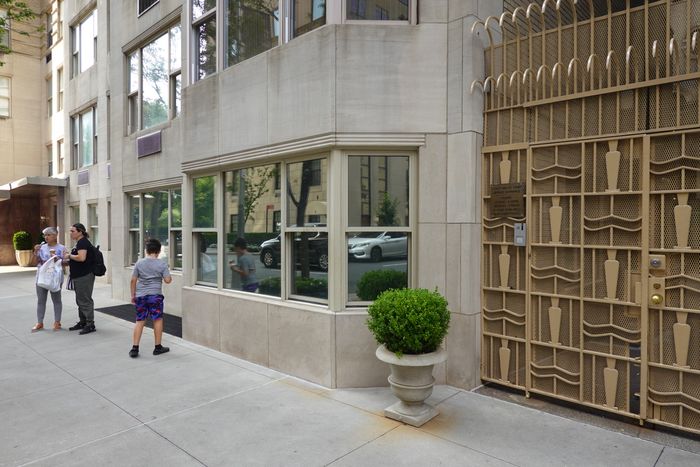
One-way glass at 1 East 66th Street hides two private dining rooms.
Photo: Adriane Quinlan
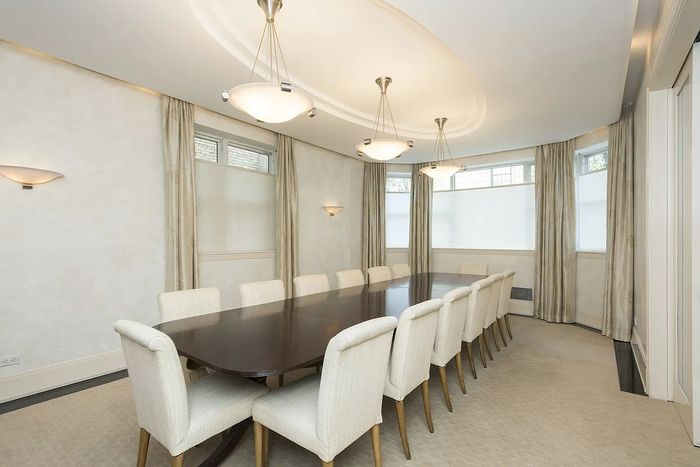
A listing photo shows the scale of the larger of the two dining rooms.
Photo: Douglas Elliman
Steinberg’s building is one of the last prewar co-ops to have a private restaurant. The amenity was ubiquitous in the years when developers were inventing the modern apartment building and the city wasn’t yet bursting with dining options, said historian Andrew Dolkart, who lives in a building that had a restaurant for exactly that reason. A private restaurant was a cost-saving measure that allowed a family to cut the difficult-to-hire cook, and a way developers could differentiate their buildings from tenements — useful to the middle-class homeowners skeptical about apartments. There was also the promise of exclusivity, a tradition that today’s luxury condo developers have incorporated into their playbook: Jean-Georges is running a restaurant at 220 Central Park South and Daniel Boulud has a private space at the Mandarin Oriental Residence. And at the turn of the century, the Dakota had one, as did 34 Gramercy Park East. At 11-15 East 45th Street, six families shared a 40-foot-long dining room on the second floor. Kitchens were a feature of apartment-hotel hybrids, including the Lowell, the Leonori, and the Sulgrave — a hotel that bought a brownstone next door and replaced it with a terrace for private dining. “There were tables out every summer,” says the historian Andrew Alpern, who wrote a dozen books on the city’s luxury apartments. “The minute I start talking about that terrace, I can mentally look over at it.” But keeping restaurants humming was expensive. The Sulgrave was eventually demolished, and even the Dakota cut its restaurant to save money, selling to an artist and an interior designer who turned the banquet hall into their living room, slept in a smaller dining room, and converted the basement kitchen into an art studio.
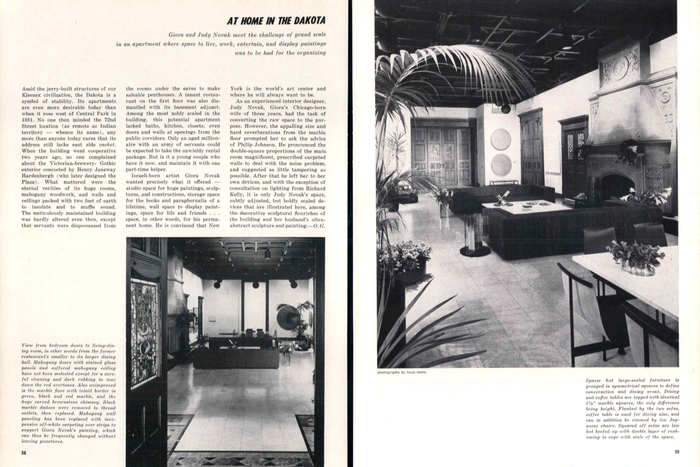
Shoots of an apartment in the Dakota seem designed to show a modern and sleek space (no clutter, wide angles) for two reasons: the contemporary art and furniture they highlight, and the outdated spaces they’re replacing — kitchen and dining rooms no longer needed.
Photo: Louis Reens/Interiors
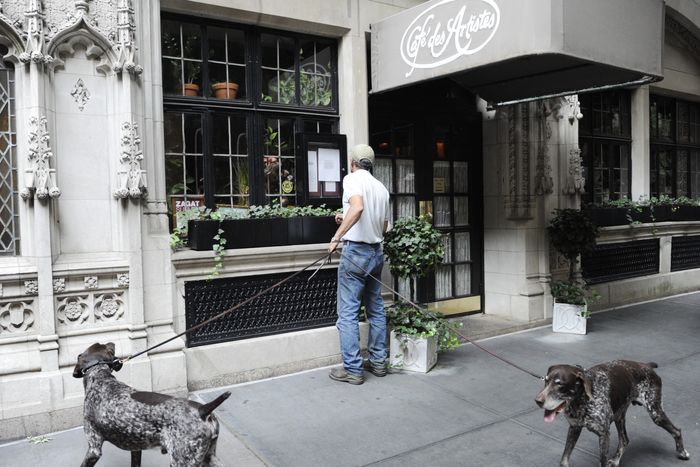
A door to the restaurant at the Hotel des Artistes building looks like it was cut into the stone sometime after 1917 — a clue that the restaurant downstairs once served only residents, who could come down to the lobby from units without kitchens.
Photo: Andrew Savulich/NY Daily News Archive/Getty Images
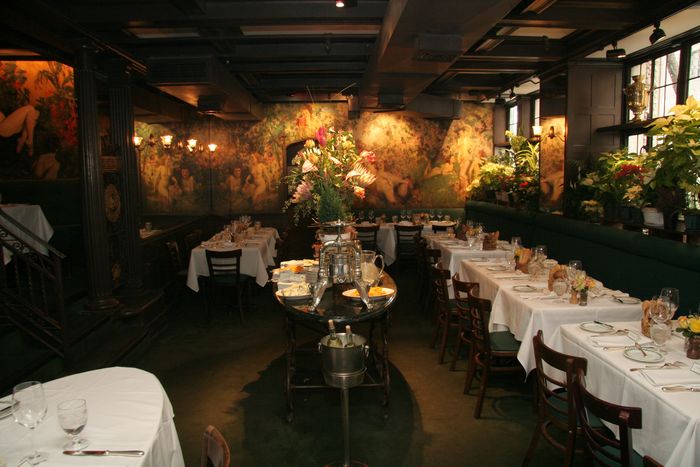
The window peers into the now-public dining room in the building, where anyone lucky can get a reservation.
Photo: Hal Horowitz/WireImage for The Weinstein Company
The surviving private restaurants are so rare that many brokers can recite the addresses from memory. “They’re kind of famous as the only three,” says Leonard Steinberg, a broker and Compass executive. They’re also all located on a short, tony stretch of Fifth Avenue. There’s the building where Steinberg served swordfish — 1 East 66th, a 1950s Art Deco tower designed by Rosario Candela that has views of Central Park. Eleven blocks north, there’s 960 Fifth, Candela’s “tour de force” of luxury design, per the architecture critic Paul Goldberger, where a penthouse sold in 2014 for $70 million after a bidding war. Fourteen blocks south there’s 825 Fifth, a stately limestone building with a jaunty pitched red roof designed by J.E.R. Carpenter. “Every single co-op in New York is different and its own private club, and I think all three of these buildings wanted the exclusivity of dining with the other residents in the building,” broker Elizabeth Sample tells me. She has sold in all three buildings and never eaten a forkful. “I’m not a member,” she says, laughing. “Just a broker.”


Henry Kissinger and Tina Brown at a party in the Georgian Suite at 960 Fifth Avenue.
Photo: Sylvain Gaboury/FilmMagic
Residents pay a fee to keep their respective kitchens humming — at 1 E. 66th, it’s around $400 a month — and get billed if they spend more on a Christmas roast for 12. “It’s not just meat and potatoes,” says Diane Johnson, a broker with Douglas Elliman who has sold half a dozen units at 1 East 66th. “Anyone you talk to will say the food’s phenomenal.” Sample’s clients at 825 raved about the menus there, and memories of a “really good creamed spinach” stayed with the poet Honor Moore, who grew up in the building. These days, most residents are opting for lunches and dinners sent up to their apartments over taking meals in the dining room. A real-estate adviser who goes by 825 regularly told me, point blank, “No one eats there.” The kitchen at 960 was losing about $100,000 a year before management started renting it out more aggressively for parties in the 1980s, just as the Reagan-era tastes of the day made the Vanities co-op seem chic. In 1985, media mogul William Paley, Met opera director Schuyler Chapin, and other “hopelessly civilized guests” attended a classical concert thrown by Ann Getty in the dining room of 960 Fifth (though the performance was apparently interrupted by a loud dishwasher). In 2003, Tina Brown used the room’s old-world address to lure Henry Kissinger, George Plimpton, and Alec Baldwin to a network TV party. The space is “gorgeous,” per Kirk Henckels, a Sotheby’s broker with friends at 960, and who included it in his book on luxury buildings, Life at the Top. But photos make it seem more like a stodgy wedding venue, which of course it has been through the decades.
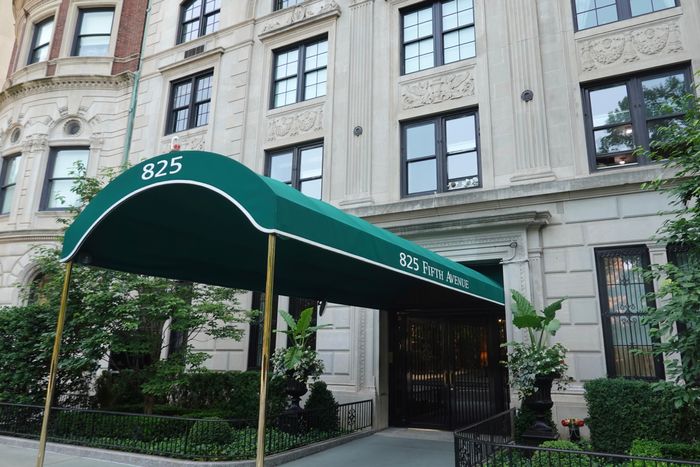
The white-glove building at 825 Fifth Avenue dates to 1926. It faces the Central Park Zoo.
Photo: Adriane Quinlan
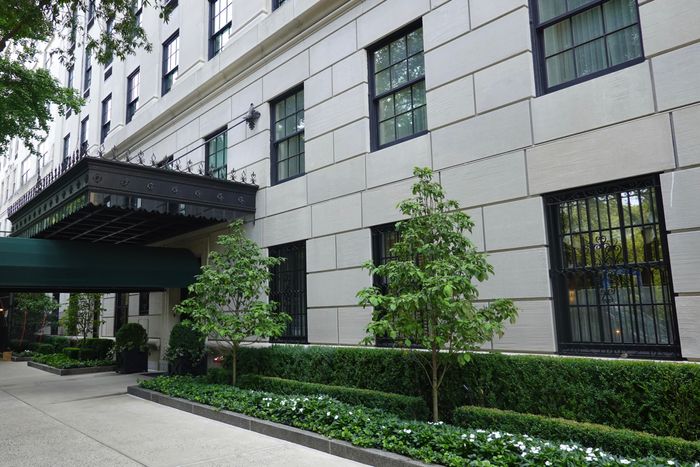
960 Fifth Avenue was designed in 1927. This is the main entrance on Fifth, but separate entrances on East 77th lead to the dining rooms and smaller apartments.
Photo: Adriane Quinlan
If the restaurants are also generally empty and underused nowadays, it might be because they were designed for a very different purpose. 825 had a restaurant because the apartments upstairs were smaller and came without kitchens, a feature of a building designed as a hybrid hotel, which could be built higher thanks to a zoning quirk. But wealthy buyers bought up blocks of these units, creating palatial spreads with working kitchens, and opted instead to hire their own chefs. (The entire 15th floor, for example, is now a four-bedroom with a library and terrace.) 960, on the other hand, is a “very special case,” says Alpern, the historian. Candela turned the back of the building into 60 smaller rentals with their own entrance at 3 East 77th Street, and a restaurant would have been an obvious appeal for itinerant renters who didn’t want to hire a staff. “It was a big hassle,” said Alpern, “and not having to do that was definitely an amenity.”
But the building long ago went co-op, units were glued together, and getting in requires social clout. In 2006 a broker with a listing there said that anyone interested in buying needed to “rub shoulders with the du Ponts or Kennedys.” It sold to a du Pont herself — socialite Emily “Pemmy” du Pont Frick. She moved in after selling a unit at 825, and the listing broker told the New York Observer that “Mrs. Frick said that this was her kind of assisted living. Get it? The restaurants assist you with everything.” That’s a joke that Kathryn Steinberg makes about her building at 1 East 66th, too; she’s a broker at Sotheby’s who has convinced some of her friends to move in, with visions of aging in place and playing bridge in the dining room. “We laugh about it all the time and our other friends are very envious, as well they should be.”

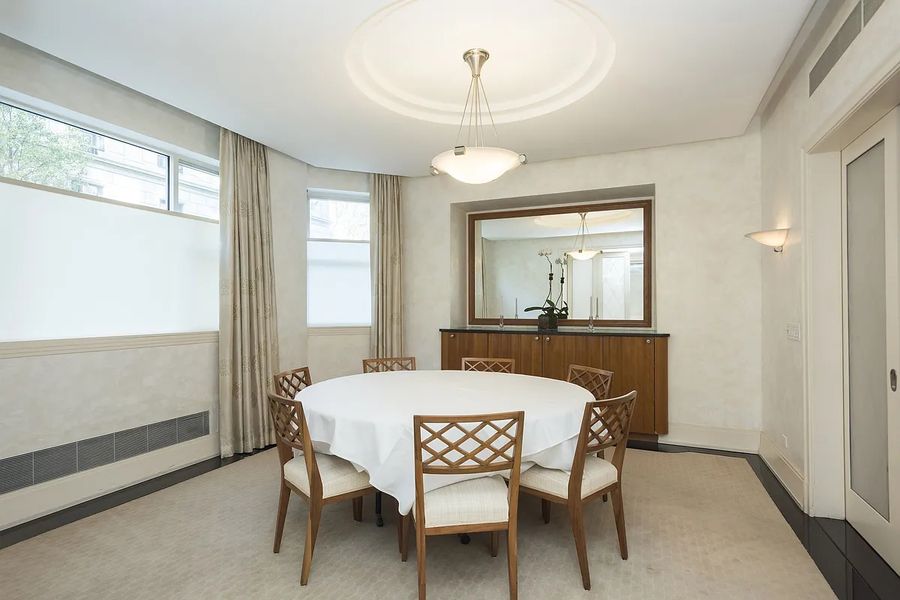
Bridge, anyone? A listing photo shows the smaller of the two dining rooms at 1 East 66th, decorated simply so residents can spruce it up for private parties.
Photo: Douglas Elliman
But the kitchen at 1 East 66th was quiet when I visited in early August — the chef is currently in France and “unreachable,” according to Kathryn Steinberg. She was happy to give a tour. (Doormen at 960 Fifth and 825 Fifth were no help at answering specifics or giving me a peek of the restaurants there, and emails and calls to the building’s managing agents were a dead end.) We met in the lobby, where she popped open a door in a wall with scrolled wood paneling. It led down a hall, with floors marbled in what she believes to be the original Candela designs — an Art Deco motif of nestled squares. Off to the right was a coat closet, a men’s room, a women’s room. On the left, a stately wooden door led back to a commercial kitchen, with a large steel prep table and, past it, a high rectangle of windows into a courtyard. Back out in the hall, we pivoted into the two dining rooms. One sat 12 around a circular table, the other 16 around a longer oval, and each was bright and cheery, with beige carpets and white walls. I admired the claw foot on the large wooden dining table, but there wasn’t much else to remark on. The place had the lurking sterility of an upscale medical office, with ground-floor windows that showed the shadows of passing pedestrians. I could imagine Steinberg bringing down a bowl of fruit or flowers to liven the place up for a party. As if she could hear me, she said the board had just started discussing a renovation. Nothing fancy, just a fresh start.
See All
link